

Five questions for Jeffrey Nytch
When Jeffrey Nytch, D.M.A., prepares students for potential nonlinear career paths, he’s speaking from experience.
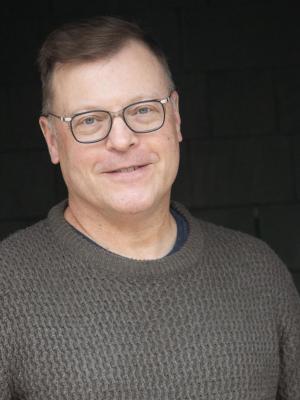
“I didn’t go to college to major in music,” said Nytch, a professor at CU Boulder’s College of Music. “In fact, I was interested in business and finance. Music had always been in my life, but I was told that it was ‘a great hobby but a lousy way to make a living.’”
While an undergraduate at Franklin & Marshall College in Pennsylvania, Nytch fell in love with geology; he also began to seriously study composition for the first time.
“I couldn’t choose which to do, so I double-majored in both,” he said. “Come graduation, I still couldn’t choose, and so I actually went to grad school in geology for a year before realizing that the thing that mattered more than anything else was music.”
For 15 years, following grad school at the Shepherd School of Music at Rice University, Nytch freelanced as a performer and composer, worked as director of operations for a startup in Houston, did occasional adjunct teaching at Carnegie Mellon University and served as executive director of Pittsburgh New Music Ensemble.
“Around 2008, I began to reflect on my career to-date: I felt like I hadn’t discovered what I should really be doing: I’d had all these experiences, but they were mostly by chance, and I learned by falling on my face, getting up, dusting myself off and moving on,” he said. “It occurred to me that if I’d had the chance to study career skills for the performing arts back when I was in school, my journey would have been very different – or at least a lot easier than it had been to that point! And it was right then, late 2008, that I heard about the job here at CU Boulder, and I knew it was perfect.”
Shortly after arriving at CU Boulder, he began work on his book “The Entrepreneurial Muse,” partly aimed at professional musicians who are leery of entrepreneurship. A professor of composition, Nytch also led the college’s Entrepreneurship Center for Music (ECM) as its director beginning in 2009 and continuing through last year.
“The ECM is, of course, a resource center, a channel for teaching and advising and the like,” Nytch said. “But at its core I think it’s about empowering our students to embrace their gifts and the future those gifts can bring. I have a Yoda bobblehead on the desk in my office, and I kind of see myself as a sort of Yoda for our students.”
This year, Nytch was named to the newest cohort of President’s Teaching Scholars at CU.
“I’m deeply honored,” Nytch said. “One of the things I’m most excited about is the interdisciplinary focus of our cohort. I still draw on my geology education and have a deep passion for finding ways to bridge different fields of study, different approaches to the world. I look forward to exploring that with my fellow Scholars.”
1. You used experiences from your unconventional career path to create a workshop, “Popcorn & Vending Machines: Lessons from a career in the trenches.” What’s the meaning behind the title?

Much of the workshop is about my years of trying to figure out how to make a living doing the thing I loved most: being a musician. The popcorn refers to my “rock bottom” moment, when I left Houston after the company I worked for went out of business and I suddenly (and unexpectedly) found myself single. I had no money, no place to live, and 9/11 had just happened: The economy had ground to a halt.
So I crashed on a friend’s couch in Austin and got a job serving popcorn at the University of Texas basketball games. I was humiliated: Here I was, seven years out of my doctorate from a distinguished conservatory and with some early successes that everyone told me were going to lead to a great career. And I was angry, because I felt like I’d done everything correctly, checked all the boxes – and yet here I was!
I came to realize that life isn’t a vending machine: We can’t be sure that if we do all the “right things” (we put the right amount of money into the vending machine) that a career will automatically materialize (we get our snack). It was a real turning point for me, and one that I recount for students all the time. Yes, we have to put in the work, but that’s just the beginning.
2. When the arts, broadly, and music, specifically, are at the forefront of a student’s pursuits, what are your keys to successfully teaching them business and entrepreneurship?
This is one of the biggest challenges that me and my colleagues across the country all face, because students in the arts are often wary of business. They fear it will take them away from what they’re passionate about, or even that entrepreneurship is about “selling out,” and therefore to be avoided at all costs. So you have to start by demystifying these ideas, to show them that entrepreneurship is simply about how to generate value for their artistic work. It’s about empowering their creativity, not stifling it.
Once you get over that hurdle, it’s a lot easier to talk about the practical elements of business and entrepreneurship, because they’re just tools towards an artistic end. And I fervently believe that musicians are, in fact, natural entrepreneurs; they’re just not used to thinking of themselves in that way.
3. You were director of the Entrepreneurship Center for Music from 2009 to 2025. How did the center grow during that time, and what did you most enjoy about the experience?
I’m extremely proud of the work we did during my tenure as director. I say, “we” because I couldn’t have done it without the support of College of Music staff, supportive deans, generous donors, and faculty allies across campus.
Some important milestones were: completely rebuilding the curriculum; creating a Certificate in Music Entrepreneurship (in partnership with the Leeds School of Business); gaining approval for our introductory career skills course to be required for all B-Mus students.
When I came in 2009, students had no idea what the ECM was or why they needed it. Today, it’s an integral part of how the College of Music envisions its approach to educating our students. As a result, in 2020, we were the first entrepreneurship center in the arts to win the Specialty Entrepreneurship Award from the Global Consortium of Entrepreneurship Centers.
On a more personal level, CU was the first school anywhere to create a tenure-track line devoted exclusively to arts entrepreneurship, and I was the first person anywhere to earn tenure as an arts entrepreneurship scholar/teacher/practitioner.
While blazing a truly new path in academia is not easy, it’s been incredibly important for CU and for the field of arts entrepreneurship. It has put us on the map as a leader in a field that has only gained traction the last decade or so. We’ve been a model for other universities and conservatories who are starting their own programs, while I and a handful of other scholar/educators have helped codify the profession and mentor the next generation of leaders for our field. That’s been immensely satisfying.
I think the thing I enjoyed most about the experience was seeing the impact the ECM has on students, to see that proverbial light bulb go off when you help them see that their career needn’t be a source of anxiety or dread but instead presents a world of possibilities, of opportunities.
4. As a composer, are there elements or traits of your work that you treat as your signature? Does your role as an educator influence how you go about composing music?

I want my music to connect with my audience, to encourage them to reflect on the human condition and our place within the broader community that is our Earthly home. Virtually everything I write uses some kind of story as a launching point for that dialogue. And in the end, I believe in Hope. In redemption. But we can only experience those things if we first acknowledge the dark side of things, the pain and loss and challenges that define our existence. And that journey – from darkness to light, if you will – defines my work.
And entrepreneurship has definitely influenced how I go about conceiving a new project: I’m constantly thinking about how I can partner with local organizations to fund and present the piece as well as provide a way for the audience to respond. For instance, my string quartet, For the Trees, which is about the tragedy of deforestation, is always presented in partnership with local environmental organizations who speak with the audience after the show and provide resources and opportunities to get involved. That’s a very entrepreneurial way to think about the music we create, and it’s an example I use a lot to show that entrepreneurship isn’t really about money, it’s about making an impact.
5. What’s next for your teaching and research?
Now that I’ve stepped down as director of the ECM, I have the opportunity to teach some of our composition students. That’s not something I’ve done much of in the past, and I’m loving it! A private lesson is very different from a classroom, and it’s exciting to be embarking on a new chapter relatively late in my career.
Research-wise, I’m toying with another book (though I think it may be more focused on a broader, nonscholarly audience). And I have many compositional projects lined up, including another environment-inspired orchestral work, Hunger Stones, and my first opera, a one-act adaptation of Ray Bradbury’s short story, The Day It Rained Forever.
Editor’s note: CU Connections will feature other members of the newest cohort of President’s Teaching Scholars in the weeks ahead.