Five questions for Jennifer Trujillo
Jennifer Trujillo, PharmD., is a professor in the Skaggs School of Pharmacy and Pharmaceutical Sciences at CU Anschutz. A diabetes specialist, she practices at the University of Colorado Center for Adult Diabetes Care and Research.

“I was always drawn to a career that combines science with helping people,” she said. “Pharmacy appealed to me because it sits at the intersection of those two interests. Early in my career, I became particularly interested in diabetes care because it requires much more than selecting the right medication. Success depends on education, communication and helping people with diabetes navigate complex decisions every day.”
An academic career provided Trujillo with the opportunity to combine clinical practice with teaching.
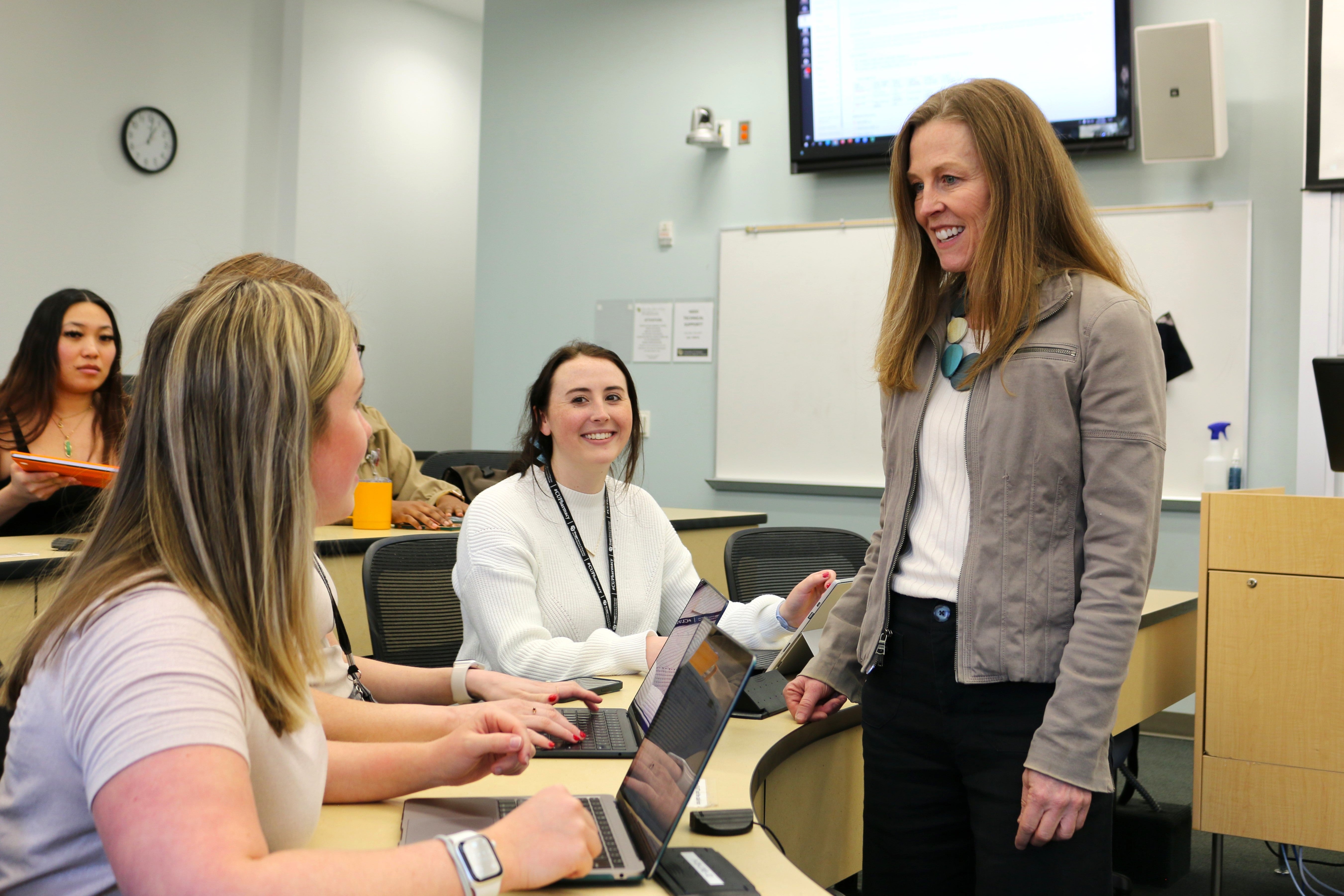
“What I quickly discovered was that I loved helping students make connections between what they learn in the classroom and what happens in patient care,” she said. “Over time, teaching became as rewarding to me as caring for patients. Today, I still practice in diabetes care, and that clinical work continually informs my teaching. It helps me bring real-world experiences into the classroom and reminds me why preparing students well matters so much. Every student we teach will go on to care for thousands of patients during their career. When we invest in teaching, the impact extends far beyond the classroom.”
Earlier this year, Trujillo was named to the newest cohort of President’s Teaching Scholars, a designation recognizing CU faculty who skillfully integrate teaching and research at an exceptional level.
Her favorite aspect of campus life at CU Anschutz is the sense of shared purpose.
“CU Anschutz brings together experts from so many disciplines: medicine, pharmacy, nursing, dentistry, public health and biomedical sciences,” she said. “Everyone approaches problems from a slightly different perspective, but we’re united by a common goal of improving health. I find that incredibly energizing. It’s an environment that encourages collaboration, innovation and lifelong learning.”
1. You practice at the University of Colorado Center for Adult Diabetes Care and Research. How has diabetes research and care changed over the course of your career and where do you see it headed?
The pace of change has been extraordinary. When I started practicing, patients relied primarily on finger-stick glucose monitoring and had fewer medication options. Today, continuous glucose monitors provide real-time information, insulin delivery systems have become increasingly sophisticated, and we have medications that improve not only glucose levels but also cardiovascular and kidney health.
What excites me most is that diabetes care has become more patient-centered. We spend less time focusing solely on numbers and more time helping patients achieve their personal goals and improve quality of life.
Looking ahead, I think technology and artificial intelligence will play increasingly important roles. We’ll have more data and better tools to personalize treatment. At the same time, we’ll need healthcare professionals who can help patients make sense of that information and ensure these advances benefit everyone.
2. As an educator, you have had students use and interpret continuous glucose monitors to experience what it’s like to manage diabetes. Is there a common theme to the reactions of students?
The term I hear most often is “eye-opening.”
Students are often surprised by how dynamic glucose levels can be, even in people without diabetes. They see firsthand how meals, exercise, sleep, stress and daily routines influence glucose patterns.
But perhaps more importantly, the experience builds empathy. Students begin to appreciate that managing diabetes isn’t simply about taking medication. It involves dozens of decisions every day. Many students tell me that after wearing a continuous glucose monitor, they approach patient conversations differently because they better understand the challenges patients face.
3. You mentioned AI earlier. How are you using generative AI in your teaching and research?
I view AI much like other technologies that have transformed healthcare and education. Our responsibility isn’t to ignore it; it’s to help students learn how to use it thoughtfully and responsibly.
In my teaching, we’ve started introducing students to the strengths and limitations of generative AI. We discuss how it can support learning, where it can make mistakes and why critical thinking remains essential.
In my research, I’ve been studying how AI might support educational activities such as assessment and feedback. One of the key findings has been that AI can be a useful tool, but human expertise remains indispensable. The most effective approach is often a partnership between technology and educators rather than one replacing the other.
I think helping students become informed users of AI is now an important part of preparing them for the future workforce.
4. What does it mean to you to be named a President's Teaching Scholar at CU?
I was very honored and humbled by the recognition.
Teaching has been the central focus of my career for nearly three decades. What makes this award especially meaningful is that it recognizes sustained commitment to student learning and educational innovation.
I also see it as recognition of the many students, colleagues and collaborators who have influenced my growth as an educator. Teaching is rarely a solo endeavor. The best ideas often emerge through collaboration.
Most importantly, the award reinforces something I strongly believe: that teaching matters. The work we do in the classroom has a ripple effect that ultimately reaches the patients and communities our graduates serve.
5. What’s next for your teaching and research?
I remain passionate about helping students become practice-ready pharmacists.
One area I’m particularly excited about is exploring how emerging technologies, including AI, can enhance learning while preserving the human elements that are so important in healthcare. I’m also interested in continuing to develop innovative educational experiences that help students build clinical reasoning, communication skills and empathy.
At the same time, I plan to stay closely connected to diabetes care. My clinical practice continues to inspire both my teaching and my research, and I think that connection between patient care and education is one of the most rewarding aspects of my career.