Five questions for Ed Mills
While “professional shopper” doesn’t begin to fully reflect the scope of Ed Mills’ job, he’s not above using the term in casual conversation to describe what he does for a living. The real answer is more complex and can elicit polite nods and vacant looks.

As CU’s chief procurement officer, Mills oversees purchasing, contracting, strategic sourcing, travel, expenses, data analytics and technology for the university, which he likens to operating a handful of small cities.
“Each (campus and system administration) needs supplies, services and support to function,” he said. “My team makes sure those things are there, on time and at scale, in support of each one’s mission.”
If this sounds like a big job, it is – and it involves big numbers: More than $1 billion moves through CU’s Procurement Service Center (PSC) each year. That represents thousands of contracts, purchase orders and invoices. For Mills, who began his career decades ago in Washington, D.C., with the Department of Defense, it’s the meaning behind the money that matters.
“Every one of those dollars is tied to CU’s mission of world-class education, research and health care,” he said. “That’s what makes the work meaningful and every transaction important.”
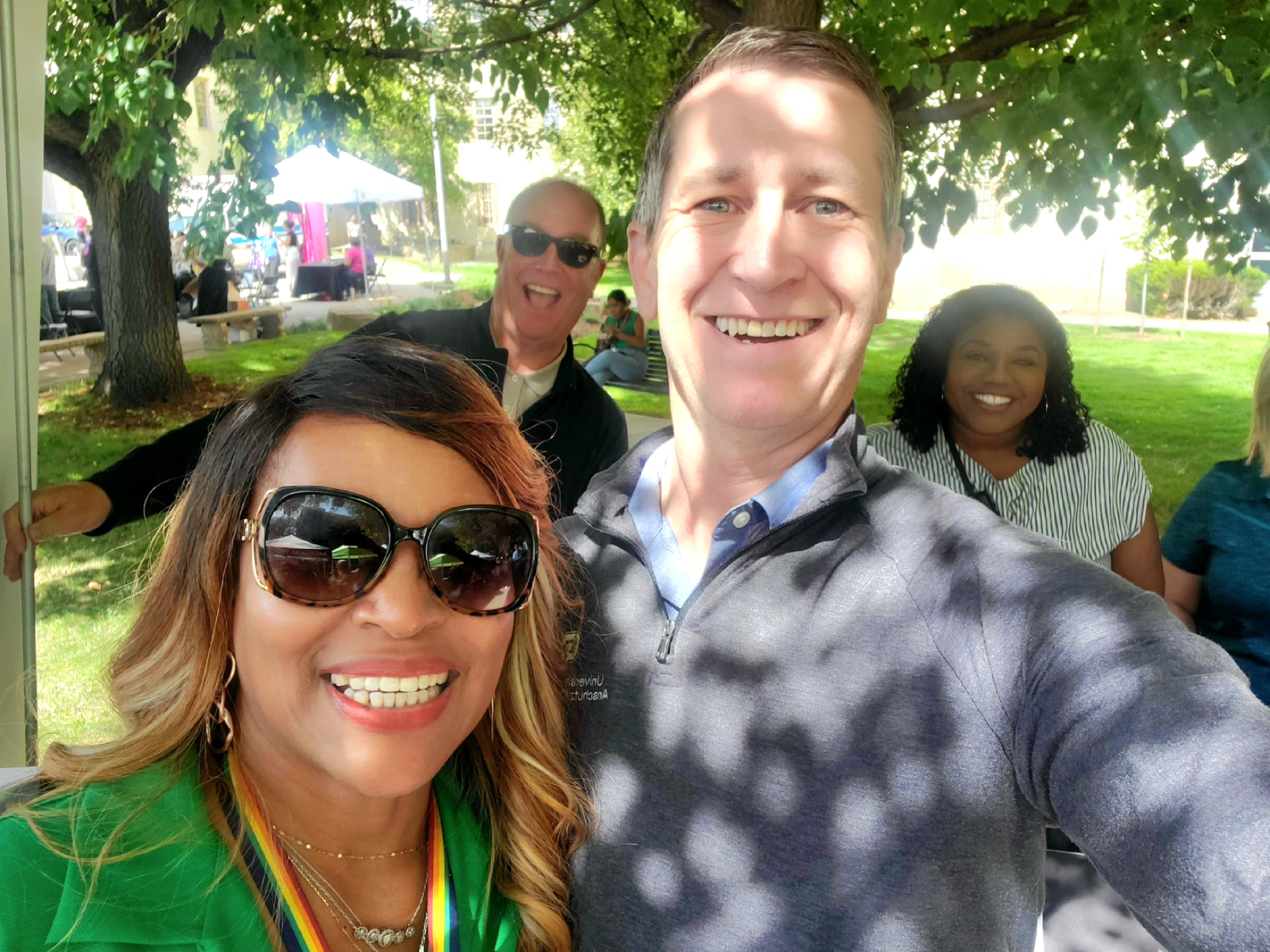
For this CU Connections interview, Mills shared his thoughts on what constitutes good procurement, how CU works to strengthen Colorado businesses and the next frontier in his field.
1. How would you describe your approach to your job as chief procurement officer and the impact it has on the university?
Early in my career, I was a procurement customer, and I remember sitting in meetings thinking, “Why is the answer always no?” That experience taught me that good procurement is about listening, adapting and still finding a way to deliver, and it shaped how I operate today.
I want my team to be problem solvers, not gatekeepers. We always try to show what “yes” looks like. Not too long ago, we were evaluating a policy exception request from one of the campuses. If we followed the policy standard, we’d have to deny the request. But we took time to dig deeper and understand the root of the issue, and we were able to find a creative solution. It also sparked a conversation about a longer-term strategy with high payoff potential. These types of wins feel good!
Another win for the university this year was CU Boulder Athletics finalizing a 10-year pouring rights agreement with Pepsi that eliminates single-use plastics. That one demonstrates the power of partnership. Boulder Athletics had a bold vision, and we were able to support it with a unique approach to competition and contracting. The result was a better deal for CU, a first-of-its-kind sustainability win for Athletics, and a blueprint for others to follow. Shortly after we announced the deal, I was on a call with a colleague at another university and he said, “You beat us to it!” That’s a good feeling and a testament to CU’s leadership in this area. We’re proud to have played a part, but the real credit goes to our campus partners who set the vision, invited us in and never let go of the idea that it could be done.
2. How does the PSC help departments across the CU system get the most value for their expenditures?
Value looks different depending on who’s asking. For some, it’s getting a contract signed fast. For others, it’s saving money or finding a supplier who really understands their needs. Sometimes it’s maximizing our economic impact locally or reducing our environmental footprint. Often, it’s all of the above.
We aim for cost savings, efficiency, speed and quality at scale, but we also know every department has its own pressures and priorities. The best days are when a department tells me, “That was easy.” That’s what we’re after: getting them what they need quickly and reliably so they can focus on their mission.
A good example is how we moved Amazon spending from P-Cards into the CU Marketplace. It took a lot of groundwork with Amazon and some big change management on our side, but it paid off. Now people have convenience, with better pricing, stronger spend controls, less reconciliation work and better alignment with CU’s impact goals. It is a win for the university and for the people who no longer wrestle with receipts at the end of the month.
3. What steps does CU take to do business with Colorado companies?
We’re a Colorado institution, and we know our spending can strengthen local communities. In fact, it’s core to our mission. A few years ago, we launched what we now call our Impact Spending program, making sure we’re intentional about who we do business with and how those dollars flow through the state.
With support from the Board of Regents and our campuses, we’ve expanded outreach to local businesses, created mentor-protégé programs, and given departments more latitude to choose Colorado suppliers. It’s a win for the university and a win for the communities we serve. Our campus partners have been very supportive of these initiatives, and all have created or branched out from our Impact Spending program.

4. What projects or initiatives within procurement are you most excited about and why?
We’ve been on a transformation journey for a few years now by upgrading systems and helping our team focus on the work that adds real value. We’re working toward a world where we don’t have to chase things through email. Last year, we delivered a major overhaul of the requisition process, and it’s been a real game changer for us and our customers. We’re making good progress, but there’s more to do.
The next frontier that excites me now is the potential for AI to accelerate and expand our process improvements. We are AI Ready now and are moving toward being AI Forward. We’ve already started putting AI into practice and have our sights on projects where it could make a big difference. One with growing momentum is AI-enabled contracting. Done right, this could give faculty and staff back more of their time, reducing email threads and freeing them to focus on the work they came to CU to do.
5. What’s one thing you’d like the CU community to know about the work you and your team do in procurement?
Procurement is one of those behind-the-scenes functions that touches everything, but people may only notice it when something goes wrong. We cover a very broad landscape, and we’d love to know more about your corner of the university. We’re here to support you, and it’s a privilege to be part of this community and to play even a small role in its success.
What I’d love the CU community to know is that there’s a team of dedicated professionals working hard every day to keep the wheels turning. And they deeply care about your mission. I have never worked with a group so committed and engaged, and it is a privilege to be part of what they do.
For more information about CU’s Procurement Services Center, visit cu.edu/psc.